Welcome to my new entry... now i've got an assignment from my softskill lecturer... the subject is about tourism. and the things that i want to discuss is Passport and Visa... Lets Roll
PASSPORT
.A passport is a travel document, usually issued by a country's government, that certifies the identity and nationality of its holder primarily for the purpose of international travel. Standard passports may contain information such as the holder's name, place and date of birth, photograph, signature, and other identifying information. Many countries are moving towards including biometric information in a microchip embedded in the passport, making them machine-readable and difficult to counterfeit. As of December 2008, 60 countries were issuing biometric passports, and this number was 96 as of 5 April 2017. Previously issued passports usually remain valid until each expires.
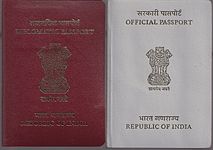

Left to right: diplomatic, official, and regular passport from India.
Each passport type has a different cover colour.
A passport holder is normally entitled to enter the country that issued the passport, though some people entitled to a passport may not be full citizens with right of abode. A passport does not of itself create any rights in the country being visited or obligate the issue country in any way, such as providing consular assistance. Some passports attest to status as a diplomat or other official, entitled to rights and privileges such as immunity from arrest or prosecution.
Many countries normally allow entry to holders of passports of other countries, sometimes requiring a visa also to be obtained, but this is not an automatic right. Many other additional conditions, such as not being likely to become a public charge for financial or other reasons, and the holder not having been convicted of a crime, may apply. Where a country does not recognise another, or is in dispute with it, it may prohibit the use of their passport for travel to that other country, or may prohibit entry to holders of that other country's passports, and sometimes to others who have, for example, visited the other country.
Some countries and international organisations issue travel documents which are not standard passports, but enable the holder to travel internationally to countries that recognise the documents. For example, stateless persons are not normally issued a national passport, but may be able to obtain a refugee travel document or the earlier "Nansen passport" which enables them to travel to countries which recognise the document, and sometimes to return to the issuing country.
VISA
.A visa (from the Latin charta visa, meaning "paper which has been seen") is a conditional authorization granted by a country to a foreigner, allowing them to enter, remain within, or to leave that country. Visas typically include limits on the duration of the foreigner's stay, territory within the country they may enter, the dates they may enter, the number of permitted visits or an individual's right to work in the country in question. Visas are associated with the request for permission to enter a country and thus are, in some countries, distinct from actual formal permission for an alien to enter and remain in the country. In each instance, a visa is subject to entry permission by an immigration official at the time of actual entry, and can be revoked at any time.

A United States visa issued in 2014
A visa most commonly takes the form of a sticker endorsed in the applicant's passport or other travel document. The visa, when required, was historically granted by an immigration official on a visitor's arrival at the frontiers of a country, but increasingly today a traveller wishing to enter another country must apply in advance for a visa, sometimes in person at a consular office, by mail or over the internet. The actual visa may still be a sticker or a stamp in the passport, or may take the form of a separate document or an electronic record of the authorization, which the applicant can print before leaving home and produce on entry to the host country. Some countries do not require visas for short visits.
Some countries require that their citizens, as well as foreign travelers, obtain an "exit visa" to be allowed to leave the country. Uniquely, the Norwegian special territory of Svalbard is an entirely visa-free zone under the terms of the Svalbard Treaty.
Some countries—such as those in the Schengen Area—have agreements with other countries allowing each other's citizens to travel between them without visas. The World Tourism Organization announced that the number of tourists requiring a visa before traveling was at its lowest level ever in 2015.
Whats Difference between Passport and Visa and how to apply it?
What's the Difference?
A passport is a legal document, issued by governments worldwide to certify proof of identity and citizenship. It is meant to confirm your identity when you visit another country that is not governed by your own. The passport includes your photo and several blank pages for official documentation when you arrive in another country. A visa, on the other hand, is an official document provided by the country you wish to visit, granting you temporary permission to enter the country for a certain amount of time. Visas vary depending on the length of stay and the purpose of your visit. They can be paper documents or just a stamp in your passport, depending on the country.
When to Use Them
When you travel outside of the United States and its territories, you must provide your passport to enter another country. In the U.S., your passport is checked before getting on any international flight. You will also have to show it to an immigration official upon arrival in a foreign country, whether at the airport or at a land border crossing. You will also need to show an official visa, whether it's a stamp or document, in some, but not all countries. Many countries, including a majority in Western Europe and the Caribbean, Canada and Mexico do not require American citizens to have a visa to visit for limited amounts of time, often three months or less. In this case, your passport will typically be marked with the date you entered or the date you are to leave by the immigration official.What You Need to Apply
To obtain a U.S. passport, you must print out and fill out the application provided by the State Department online. You must also provide proof of identity, such as a driver's license, proof of citizenship, like a birth or naturalization certificate, two 2-by-2-inch photos of your face and the application fee. Requirements for visas vary greatly by the country and the purpose of your visit. At the very least, for a tourist visa to most countries, you will need to fill out a visa application, provide a valid passport, a copy of your travel itinerary and the visa fee. Depending on the country, you may have to apply for a visa in advance of your trip at their embassy in Washington, D.C. or their nearest consulate. Others will allow you to purchase a visa upon arrival at the port of entry before going through immigration and customs.How to Apply
If you're applying for your first passport, you must submit your application documents at an authorized passport acceptance facility, such as the nearest post office. In addition to the passport fee, you must also pay the acceptance facility a processing fee. It will take roughly four to six weeks to receive your passport in the mail. If you need your passport within two weeks, you may apply at the nearest Regional Passport Agency and pay an additional fee. If you must obtain a visa in advance, the application process varies by country. Most embassies and consulates provide detailed information online about their visa procedures. Some allow you to mail in your documents, others require you to submit in person. Either way, if approved for a visa, your passport will be returned to you with a stamp or attached visa document. Plan to apply well in advance of your trip to make sure you get your documents in time.Okay, thats the little explaination about Passport and Visa...
see you in next article...
Assalamualaikum Wr. WB.
Source;
- https://en.wikipedia.org/wiki/Passport
- https://en.wikipedia.org/wiki/Travel_visa
- https://www.envoyglobal.com/immigration-news-insights/difference-passport-visa/
- http://traveltips.usatoday.com/differences-between-visa-passport-110570.html
